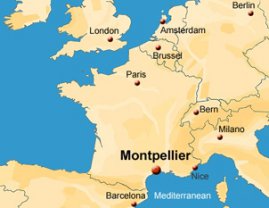
The city of Montpellier is located in the south of France, closed to the mediterranean sea and can be reached from Paris in 3h30 by TGV train. Its sweet climate, its cultural and economical dynamisms, as well as its student life make of Montpellier a very attractive place to settle.


The SMARTeam is located in the University of Montpellier (France), in Balard Building of the Cnrs campus. It is part of the institute of Biomolecules Max Mousseron (UMR Cnrs 5247). Our current research projects mainly concern the synthesis and the studies of original molecules, based on supramolecular or interlocked architectures (peptido and glycorotaxanes, lassos, double-lassos, molecular muscles), aimed to be used from the material (polymers) to the medicinal field (recognition, targeting, prodrugs, probes, diagnosis, ...). We are particularly interested in new conceptual approaches using Molecular Machines.

Last News !
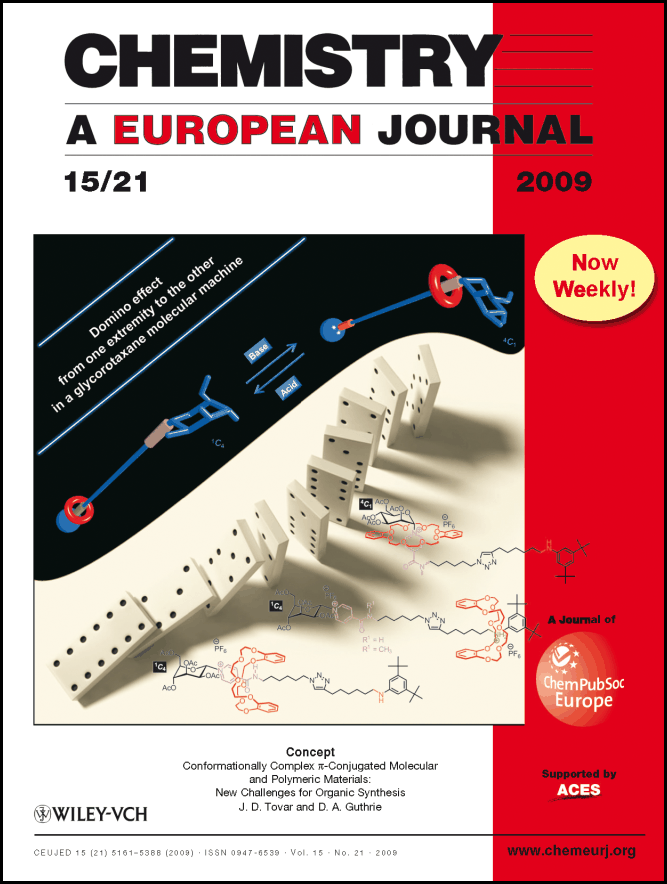
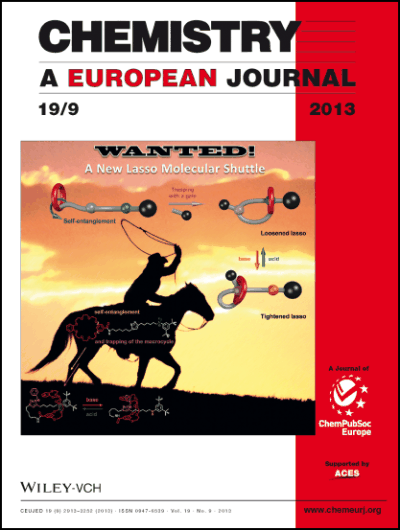
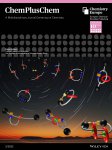
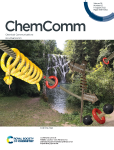
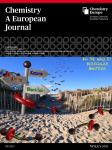
Covers of Journals !
Smarteam in the press !
How to reach the laboratory ?







Address:
Dr. Frédéric Coutrot
Supramolecular Machines and ARchitectures Team
Institut des Biomolécules Max Mousseron (IBMM)UMR 5247 Cnrs - Université Montpellier - Pôle Chimie Balard recherche
1919, route de Mende, 34293 Montpellier cedex 5
Tél. 04 48 79 21 46
frederic.coutrot@umontpellier.fr


Frédéric Coutrot

Offres de stage niveau Master 2, frederic.coutrot@umontpellier.fr

Congratulations to Ivaylo Stoyanov, BSc Trainee, for his first publication in the journal Angewandte Chemie !
Metal-free active template is a strategy to obtain rotaxanes that are devoid of any formal recognition unit between axle and macrocycle. The macrocycle promotes the interlocking reaction by stabilizing the transition state of the rate-limiting-step to the detriment of the free axle formation. In this paper, the SMARTeam reports the possibility to use this strategy to synthesize [2]rotaxanes via Nucleophilic Aromatic Substitution between an amine and halogenopyridinium or halogenoacridinium derivatives in the presence of a crown ether. Another originality is the 4-aminopyridinium moiety, which is formed during the rotaxane formation. it is able to host the crown ether around two discrete, though conjugated, sites, therefore providing a small-amplitude molecualr shuttle.
To read the article: Ivaylo Stoyanov, Arie van der Lee, and Frédéric Coutrot*, Angew. Chem. Int. Ed. 2026, 65, e8134791